The Writer's Retreat: Longhand to Markdown
A Week with the Pen
Swoosh can transcribe a handwritten manuscript from photographs of your notebook pages: your longhand comes back as clean, typed text you can shape into a draft, without losing the spell of having written it by the sea. Here is how to carry a week of pen-and-ink home as a working Markdown file.
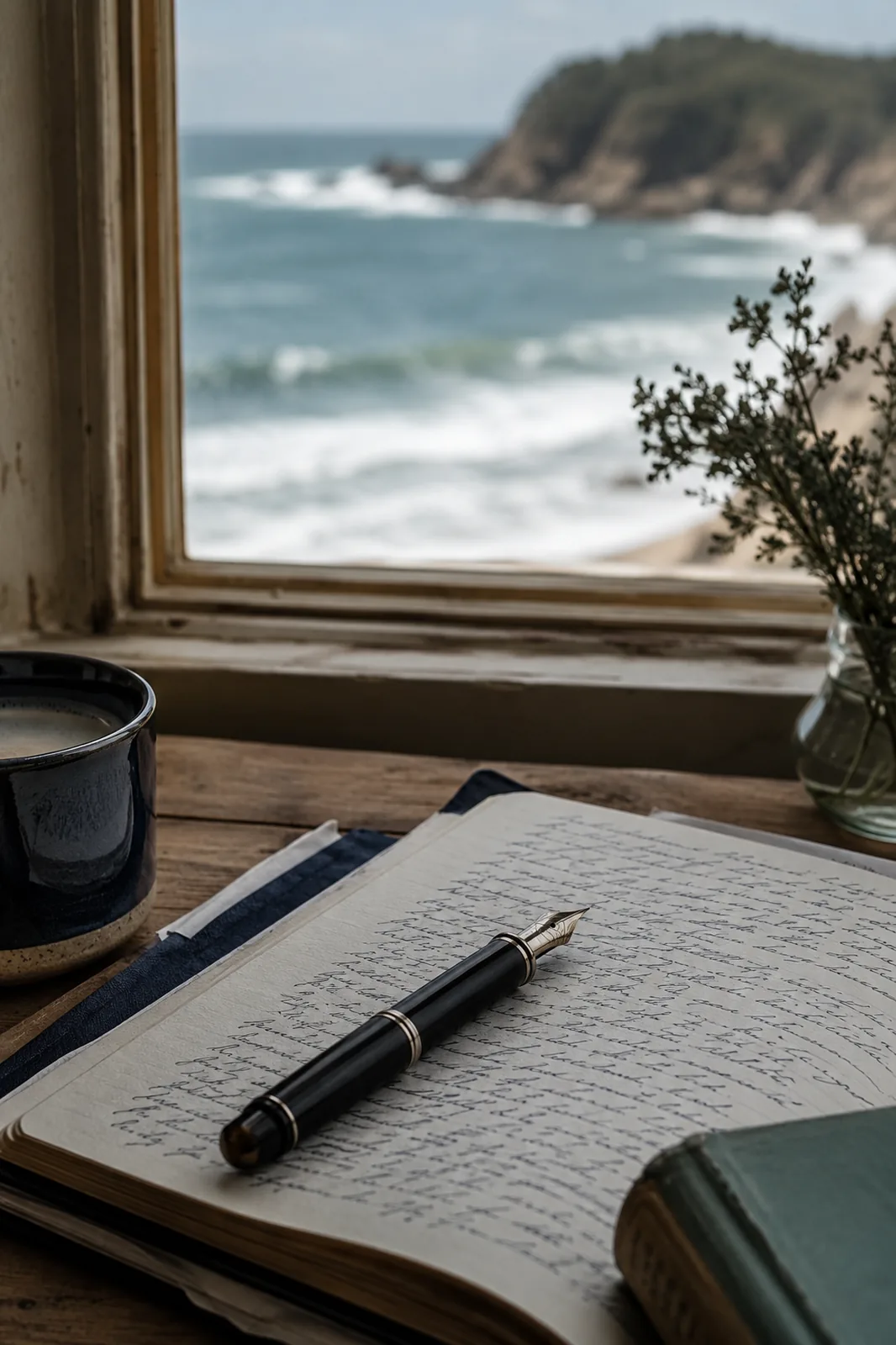
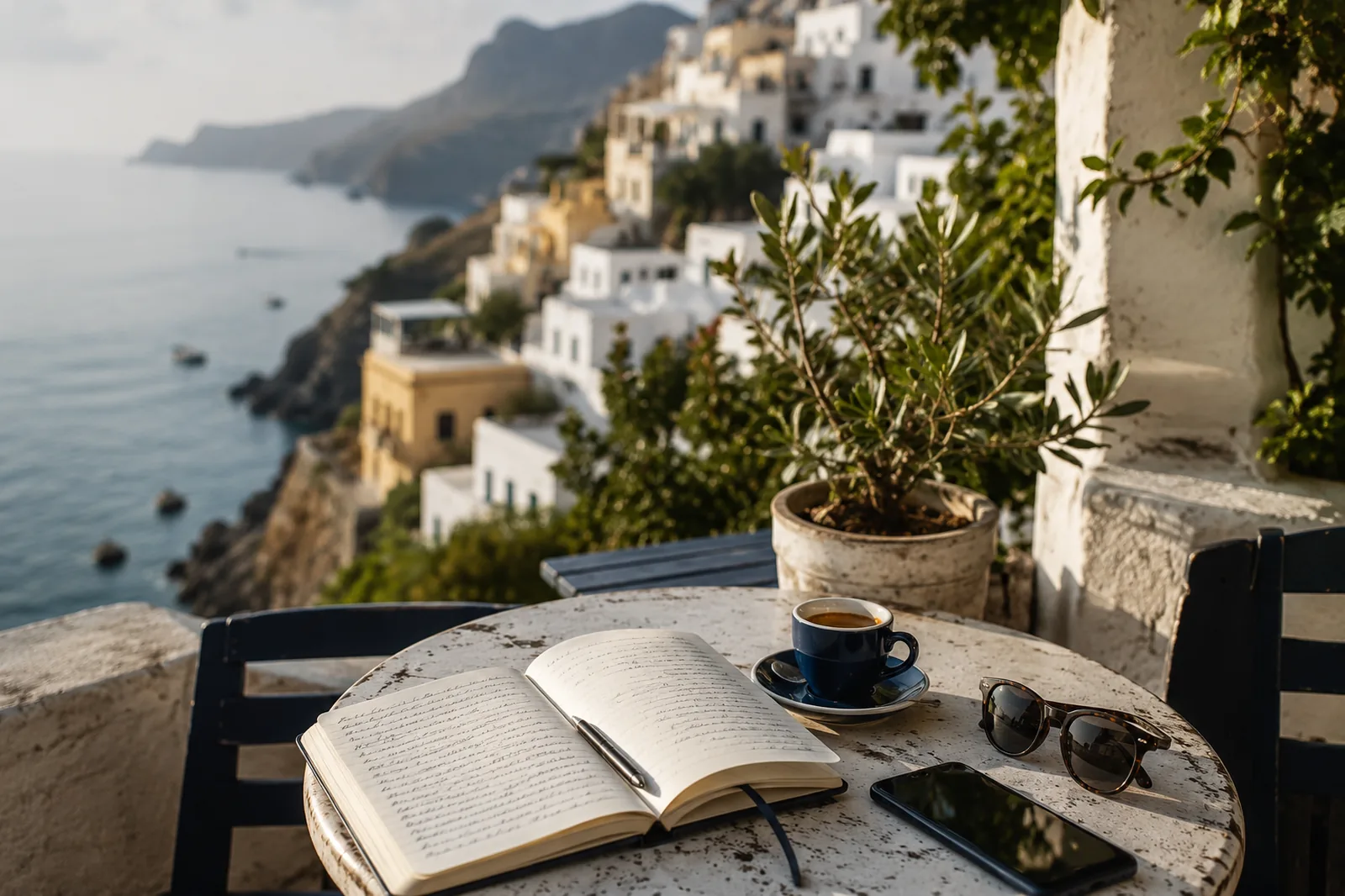
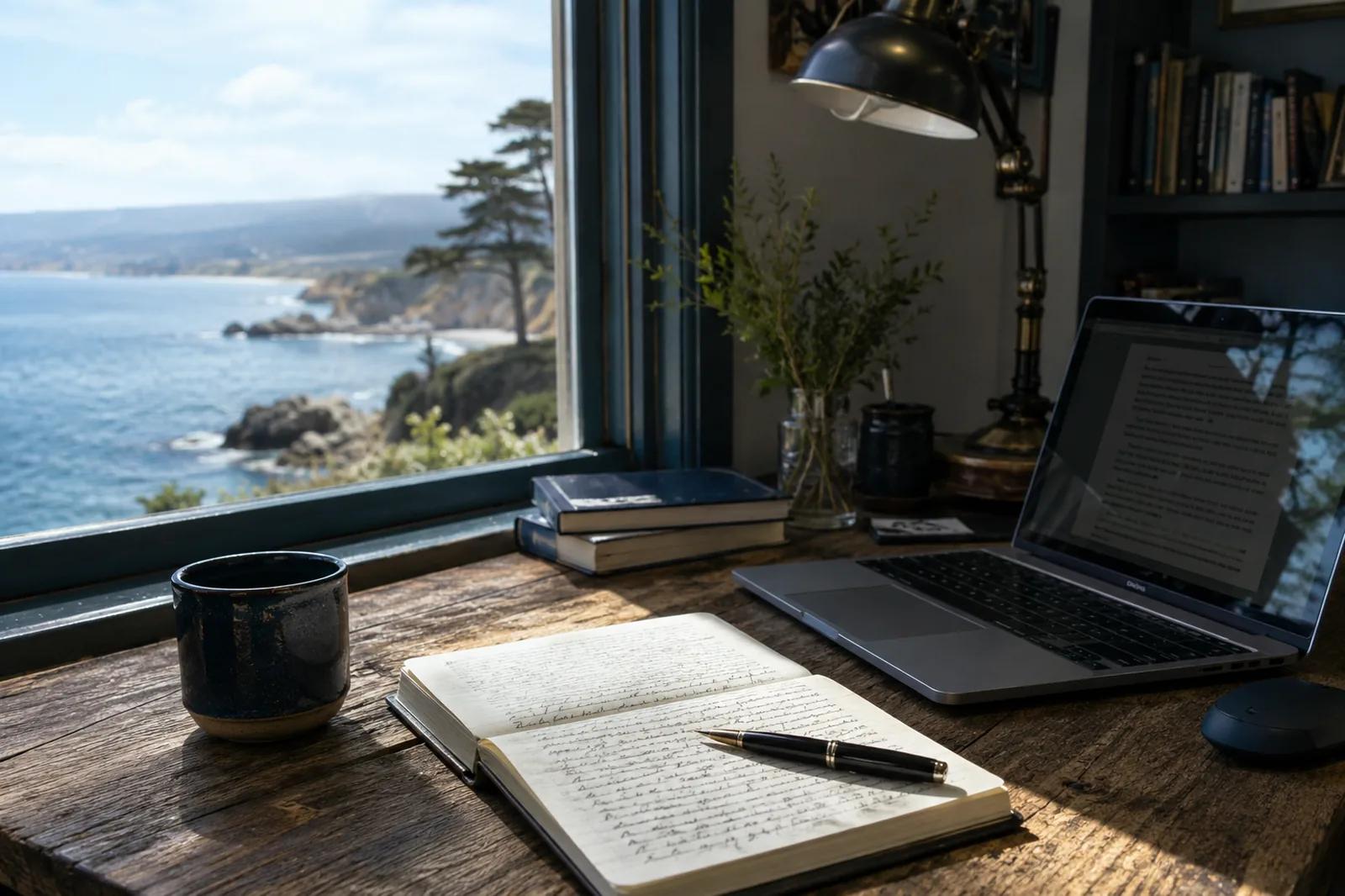
You went away to write, properly, the way you keep promising yourself you will. A cabin near the coast, the kind with a kettle and not much else. A view of grey water that turns silver in the afternoon. You left the laptop in its bag on the first morning and you did not get it out again.
So you wrote by hand. A fountain pen, because it is a holiday and you are allowed. The ink dries slowly in the salt air and you learn to wait for it. You fill one notebook and start a second. The sentences come differently this way, slower, more committed, harder to delete and so more carefully chosen. By the fourth day you have something. Not a finished thing, but a real one, in your own hand, smelling faintly of the sea.
Then the week ends, and you have to get it home, and into the only form a draft can really live in now, which is a file.
Why You Wrote It by Hand in the First Place
It is worth being honest about why the pen mattered, because it tells you what to protect on the way back.
You wrote longhand because the screen was getting between you and the work. The cursor blinking, the temptation to fix the last line instead of writing the next one, the small machine noise of a sentence being second-guessed before it is even finished. The page does not do any of that. The page just takes whatever you give it and waits for more. A notebook on a table by a window is a quieter room to think in than any document has ever been.
But a notebook is also the only copy, and it does not search, and you cannot send a chapter of it to anyone, and the next stage of the work, the cutting and the moving and the shaping, is the kind of work the page is bad at and the file is good at. The pen got the words out of you. The file is where they have to grow up.
So the move you need is a gentle one. Out of the notebook, into a draft you can work, without flattening anything that made the writing worth doing.
Transcribe a Handwritten Manuscript on the Train Home
You do not need the cabin's silence for this part, which is the point. You can do it on the train.
Photograph each page of the notebook with your phone. Lay the book flat on the seat-back tray, let the window light fall across it, fill the frame, and shoot the pages in order. A spread at a time is fine as long as each page is clear and square. You will be surprised how little fuss it takes once you stop trying to be neat about it.
The method, page by page:
1. Lay the open notebook flat where the window light falls across it.
2. Fill the frame and photograph each page in order, a spread at a time.
3. Bring the photographs to the handwriting tool to read the longhand into typed text.
4. Export the result as Markdown, with your headings and paragraph breaks intact.
What comes back is clean typed text beside the original, page for page. You read the two together as the fields go past the window. Where your own hurried hand has tangled a word, a place name, a thing you scrawled at midnight and can barely read yourself, it is flagged rather than guessed at silently, and you decide what you meant. You are still the writer. The patient, dull work of turning ink into letters is simply done for you while you watch the coast unspool.
A Draft You Can Actually Work
Here is where Markdown earns its place. Export the read-back text as a Markdown file and your structure comes with it. The headings you marked stay headings. The paragraph breaks survive. A line you starred becomes a thing you can find. Markdown is plain text, so it opens in everything and belongs to no one program, which means the draft you carried out of that cabin will still open in ten years, in whatever you are writing in then.
<p class="pull">The pen got the words out of you. The file is where they have to grow up.</p>
And the careful part, the reading, is the part the tool is built for: the fast, joined-up, midnight sort of longhand that ordinary scanning gives up on. To do that reading, the page is sent to a model, and your draft is not kept afterwards and is not used to train anything. For an unfinished book, which is the most private thing a writer owns, that honesty is not a small detail.
By the time the train pulls in you have both. The notebook, with the slow ink and the salt in its pages, which you will keep on a shelf because of course you will. And the file, open on the laptop, where the real work can now begin. The romance is in the drawer. The draft is on the screen. Nothing of the week was lost in carrying it home.
A Few Questions People Ask
Will it read my messy longhand?
It is built for handwriting, including the fast, joined-up kind you write in when you are not thinking about neatness. It reads the loops and the joins rather than matching letters one by one, and where your own hand has genuinely tangled a word it flags it so you can decide, instead of inventing something.
What happens to my unpublished work?
To read your pages, they are sent to a model that does the transcribing, and we do not keep your images or use them to train anything. Your manuscript stays yours and does not become part of a dataset, which is exactly what an unfinished book deserves.
Why Markdown and not Word?
Markdown is plain text, so your headings and structure come through cleanly and the file opens in any writing app, now and years from now. You are not tied to one program, and you can always save it into Word later if a publisher asks for it.
Bringing a notebook home? OCR your longhand. Free to try.